


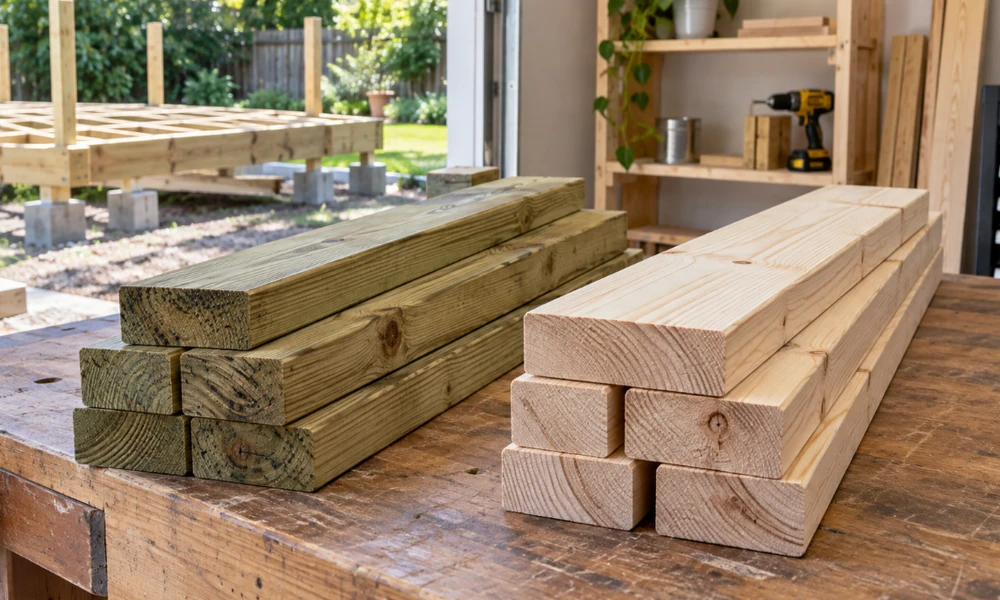
Wood may look similar in a stack, but not every board suits the same job. One important choice is pressure-treated vs. untreated wood. The difference affects where lumber can be used, how long it may last, and the maintenance it needs.
Neither option is automatically better. The right choice depends on moisture, insects, appearance, cost, and whether people will frequently touch the finished surface.
What Is Pressure-Treated Wood?
Pressure-treated wood is placed inside a sealed chamber. Air is removed, and preservatives are forced into its fibers under pressure. They help protect the material against decay, fungi, and wood-damaging insects.
Treatment does not make wood waterproof. The lumber can still absorb moisture, swell, shrink, crack, or warp. A water-repellent finish may be needed after the wood dries enough to accept it.
Pressure-treated lumber is commonly used for decks, fence posts, outdoor stairs, and framing near soil or concrete. Treatment levels differ for above-ground, ground-contact, and other conditions. Check the tag because similar-looking boards may have different approved uses.
What Is Untreated Wood?
Untreated wood has not received chemical preservatives through the pressure-treatment process. It keeps its natural color, smell, and surface characteristics. Builders often choose it for interior framing, cabinets, furniture, trim, shelving, and decorative projects that remain dry.
Some untreated species naturally resist decay. Even durable wood changes in sun and rain. It may need paint, stain, sealer, good design, and routine maintenance outdoors.
Durability and Expected Life
The main advantage of pressure-treated wood is resistance in damp or insect-prone locations. A suitable treated board usually lasts longer outdoors than untreated lumber from a less durable species.
Installation still matters. Water trapped around a post or deck board can shorten its life. Good drainage, airflow, correct spacing, and sealed end cuts can make a noticeable difference. Any field-applied treatment for cut ends should be suitable for the lumber and its intended use.
Untreated wood can last for many years inside a dry building. Using treated lumber indoors when it is not required may add cost and create unnecessary finishing challenges. The best approach is to match the wood to its actual exposure.
Appearance and Finishing
Untreated lumber is often easier to paint, stain, glue, and finish right away. Its natural grain may also be more appealing for visible woodworking projects.
Fresh pressure-treated wood can contain considerable moisture from processing. Paint or stain applied too soon may peel or fail to penetrate. Drying time varies, so moisture should be checked instead of relying on a fixed waiting period. Treated lumber may also have a greenish or brown tint, small surface marks, or more movement as it dries.
Fasteners and Safe Handling
Treatment chemicals can react with certain metals. Use fasteners and connectors approved for the specific treated lumber, such as suitable hot-dip galvanized or stainless-steel hardware. Ordinary indoor fasteners may corrode sooner.
Wear eye protection and a dust mask when cutting either type of wood. Work in a ventilated area, wash before eating, and clean up sawdust. Never burn pressure-treated scraps because the smoke and ash can contain hazardous chemicals. Follow local disposal rules instead.
Choosing the Right Material
When comparing pressure-treated vs. untreated wood, begin with the location. Wood exposed to soil, rain, persistent dampness, or insects often needs an appropriate treatment level or a naturally durable alternative. Dry indoor projects usually work well with untreated lumber.
Check local building requirements, product labels, structural grade, and finishing plans before buying. Selecting the correct board from the start helps the project look better, last longer, and avoid repairs that could have been prevented.
This post was written by a professional at Anawalt Lumber. Anawalt Lumber is a family-owned lumber yard and hardware store serving Los Angeles for over a century. Known for quality lumber, contractor supplies, hardware, building materials Los Angeles, and a full-service nursery, Anawalt provides personalized service for homeowners and licensed contractors. From job pricing and bulk discounts to special-order materials with fast delivery, Anawalt is your trusted local building supply partner in Malibu, West LA, and Hollywood.
